
Upcoming Events & Programs
Customized training at your location or ours or Zoom. Please contact us for details, or check back for posted trainings.
Opportunities include the following core programs specially tailored to meet professional and agency expectations:
- Becoming a Recovery Coach
A role training for coaches interested in adding a specialization in recovery - Clarifying and implementing Core Recovery Values
An ethics training for professional practice and organizational culture - Ethics in Non-Clinical Roles
An in-depth exploration of ethical responsibility in recovery coaching and peer support - Elevating Skills in the Training Profession to support provision of skilled clinical & non-clinical recovery services
Two-Part Original Conversation for peers & supervisors (1.5 hours)
Register for Part 2
Friday, November 21, 2025 |12-1.30pm
https://tinyurl.com/ORN-reg-Supervision-Nov-2025
LIVE ON ZOOM - Peer Supervision | Mentoring & Managing
Friday, November 21, 2025 @ noon
Are you a peer professional with an opinion on supervision? This 2-part program is for you! Part 1 of this original event was held on Friday, October 17. Join the concluding part on Friday, November 21. The event unpacks peer and supervisor experience of this vital part of professional practice and will develop recommendations for the field. Registration is FREE!
The workshop will forensically examine the peer experience of current supervision practice:
- Participants will be heard in an open environment where confidentiality of information shared has been formally established at the start of the workshop program (“Working Agreements”).
- Participants will prepare a collaborative and comprehensive SWOT analysis of their current supervision experience.
- Participants will build on that analysis to develop an operational understanding of:
- Supervision as a cornerstone of professional practice
- Value of the supervisory relationship and the challenges facing both supervisors and peers
- Importance of establishing bilateral honest, open and willing conversation between supervisors and peers
- How to advocate on their own behalf to ensure that their needs for professional management (on-the-job) and personalized mentoring (including continuing education) are met
16 hours training for foundational peer certifications
LIVE ON ZOOM - CCAR EThICAL CONSIDERATIONS
november 12, 13, 14, 2025
The CCAR Ethical Considerations for Recovery Coaches training program is designed for individuals interested in completing foundational training for professional certification. This certification may lead to non-clinical certification at Recovery Coaches or in the role of Peer Recovery Support Specialist (PRSS).
Certification is offered at state level. For a list of state-based certification providers, please see the International Certification & Reciprocity Consortium (Member Boards – ICRC). For states that aren’t IC&RC members, please Google “SUD certifications.”
The present opportunity is offered by the partnership of A Purpose for Life and Authentic Trainings. Consultant trainer, Ruth Riddick of Sobriety Together, has a decade of experience delivering CCAR training products.
Objectives
•Understand what ethics are and why ethics are so important when performing recovery coach services.
• Learn how to stay in your lane as a recovery coach.
• Understand the decision-making process.
• Develop guidelines for making ethical decisions.
• Apply the new learning to your everyday work as a recovery coach.
Registration for the November training is at https://www.apurpose4life.com/.
product-catalog .
For further information, please contact Lisa Ardner at lisa@apurpose4life.com.
workshopr for individuals preparing crpa certification
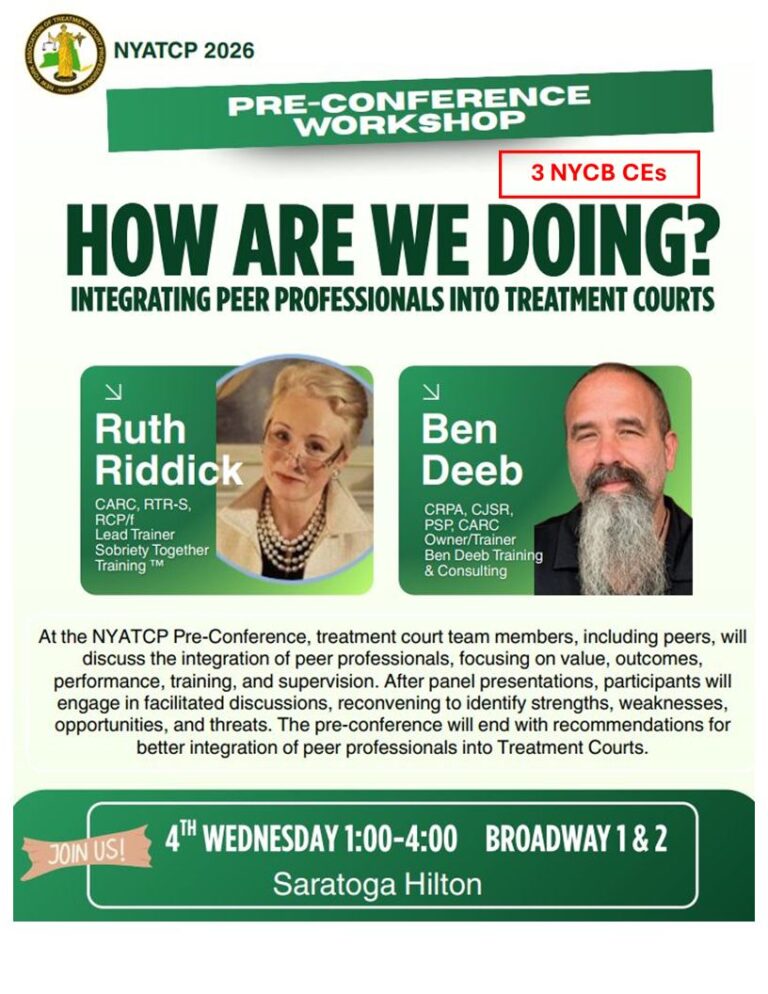
preparing for the IC&RC Peer Recovery exam? join ruth riddick who wrote the questions - in person! Friday, October 31, 2025
Subject matter expert, Ruth Riddick, served as an Item Writer for the IC&RC Peer Recovery exam. The process is shrouded in secrecy, with government ID required for entry into the exam workspace in Florida every morning of her engagement. The experience gives her a unique insight into the highly technical process of exam development.
Ruth was also deeply involved in development of the New York Certification Board’s Peer Supervision Professional (PSP) certification and competence-based exam.
Coming home to NYS, this experienced trainer developed the original IC&RC Peer Recovery Exam Prep Workshop, delivering it statewide until the pandemic forced a pivot to Zoom.
The online workshop, augmented by NYS trainers, Lori Drescher and Lisa Nichols, is still accessible at the New York Certification Board – click here to access.
Now, Ruth returns with an updated IC&RC Peer Recovery Exam Prep workshop hosted by Exponents at 17 Battery Place, NYC. This workshop includes new exam material introduced by IC&RC in July 2025.
In-person at Exponents, 17 Battery Place, NYC on Friday, October 31 (9am-noon). Register with Kyla Williams, kwilliams@exponents.org.
webinar for professional trainers
Recorded on Thursday, September 25, the webinar may be accessed here.
Contact Sobriety Together Training to customize these Training-For-Trainers products for your organization here.
Why is the Stages of Recovery model so difficult to facilitate? | a ccar webinar - available online 24/7
The groundbreaking Stages of Recovery model appears in Day 3 of the CCAR Recovery Coch Academy program. Developed from Kathleen O’Connell’s original material in Bruised by Life? Turn Life’s Wounds into Gifts (1994), Phil Valentine added a fifth stage to describe life in established and sustained recovery across a lifetime.
Facilitated by Ruth Riddick, this webinar looked at some of the challenges trainer work with when delivering the model and explored some strategies for making the model more alive, especially for participants in early recovery who have yet to experience much of the journey, its milestones and tasks.
Participants share their experience with, and strategies for, delivering the model in an engaging manner. As CCAR Recovery Coach Professional Facilitators, participants were pleased to be reassured that their challenges with the model are not unique, and to leave with new approaches.
The webinar is available for viewing on YouTube.
Two-Day immersive experiential weekend
Multiple CEs available for professionals who work with anyone in any stage of recovery. In-person on the famed Moreno Stage in Highland, NY.
Saturday September 6 & Sunday 7, 2025
9-4.30pm daily
12 credit hours
Experience a new vision of the recovery journey
- How can I understand where clients are in their recovery from active addiction?
- How does the addiction recovery process affect the coaching engagement?
- How do I train coaches who don’t themselves have any subjective (“lived”) experience of recovery?
We now understand that prioritizing recovery and developing strategies for sober daily living are key characteristics of coaching clients with substance use disorders. For coaches who are not themselves in recovery and may not be entirely comfortable working with addiction, these priorities may present challenges. Nonetheless, they don’t preclude productive engagement with the client at any stage in recovery.
Meanwhile, trainers often face challenges when working with students who are unfamiliar with long-term recovery or are themselves newly come into recovery. The experiential tools of psychodrama develop skills for trainers who want to help students envision recovery beyond triage and stabilization.
What is the Stages of Recovery model? Focused on addiction recovery, this dynamic framework explores the recovery journey across a lifetime, identifying milestones and tasks as individuals build their spiritual capital and a sustainable life. The framework, understood as a roadmap, originated with Kathleen O’Connell and was expanded by Phil Valentine at CCAR; an illustrative graphic of the model was later added by Ruth Riddick. Suitable as foundational or continuing education in any addiction/recovery support role, proficiency in the model is a requirement for peer support certification in several states. (https://www.amazon.com/dp/B09KN7XZ4D oks).
What does this two-day retreat offer? We invite professionals and their trainers, to step into the recovery journey, explore new perspectives, and rehearse new personal and professional roles. Together, we’ll move beyond triage and stabilization to living in fulfilment – all on the famed Moreno Stage in Highland, NY!
16 hours training for foundational peer certifications. dates in august & november
Join us for the CCAR Ethical Considerations Training in fulfillment of New York Certification Board requirements for initial CRPA, CPRA-Provisional and CARC certification.
LIVE ON ZOOM - EThICAL CONSIDERATIONS | Aug & nov
The CCAR Ethical Considerations for Recovery Coaches training program is designed for individuals interested in completing foundational training for professional certification. This certification may lead to non-clinical certification at Recovery Coaches or in the role of Peer Recovery Support Specialist (PRSS).
Certification is offered at state level. For a list of state-based certification providers, please see the International Certification & Reciprocity Consortium (Member Boards – ICRC). For states that aren’t IC&RC members, please Google “SUD certifications.”
The present opportunity is offered by the partnership of A Purpose for Life and Authentic Trainings. Consultant trainer, Ruth Riddick of Sobriety Together, has a decade of experience delivering CCAR training products.
Objectives
•Understand what ethics are and why ethics are so important when performing recovery coach services.
• Learn how to stay in your lane as a recovery coach.
• Understand the decision-making process.
• Develop guidelines for making ethical decisions.
• Apply the new learning to your everyday work as a recovery coach.
Registration for November is at https://app.protraxx.com/ClassDetails/437988 .
For further information, contact Lisa Ardner at lisa@apurpose4life.com.
Webinar for professional trainers
Available asynchronously via CCAR or on application to Sobriety Together
what is my education practice designed to achieve? A CCAR webinar - available online 24/7
This FREE webinar recorded in June 2025 is a reflective exploration of your practice as a professional trainer. You are invited to consider thought-provoking questions such as:
- What am I trying to achieve in my practice?
- What is my purpose in delivering this material?
- What is the most effective way to do this?
- What is the optimal delivery environment?
Building on an in-person presentation to the 2024 CCAR Annual Pathways of Recovery conference, this presentation is designed to deepen your insight into your professional practice and enhance your skills as a teacher, trainer, or facilitator. Whether new to facilitation or a seasoned trainer, this event promises valuable perspectives to support your professional growth.
Bi-monthly intersectional dialog for professional facilitators, coaches and trainers
Hosted for members by the Mid-Atlantic Facilitators Network (MAFN).
conversations about facilitation in training MAFN's bi-monthly ZOOM community of practice
Interested in participating in lively conversations with your peers about where our professional practices intersect? What can we learn from each other’s professional experience, knowledge, skills and abilities?
Established in March 2025 by facilitator, Ruth Riddick, the MAFN Conversations About Facilitation in Training community of practice explores intersections of three separate but compatible practices of MAFN members: facilitation, coaching, training.
In small-group topic-based breakout-room conversations led by rotating volunteer practitioners, we share best practices, challenges and strategies to stimulate new insight and expand our individual practices.
Topic suggestions and volunteers are always welcome. Come with curiosity; participate with passion; leave with new learning.
MAFN CoPs are member-only forums, a benefit of MAFN membership.
Upcoming dates: March 25, May 27, July 22, September 20, November 25 , 2025
approved for 1.5 hours ethics ce by nycb
Available asynchronously via NAADAC or on application to Sobriety Together
how does our passion connect with our practice?
Learning Objectives:
- Delineate and describe the elements of non-clinical practice.
- Evaluate personal attitudes and values towards dispassionate service.
- Develop personal strategies for balancing passionate motivation with dispassionate service.
Developed for NAADAC, the National Association of Addiction Professionals, this training looks at the two important questions for professionals:
- How can you protect yourself from violating professional boundaries
- What is the value of “letting go of outcomes”?
In this workshop, recorded in December 2024, we explore principles of non-clinical practice; examine the intersection of coaching and recovery; and the value of “letting go of outcomes.” This material is suitable for any professional looking to deepen ethical practice in non-clinical roles.
Webinar for professional trainers
Available asynchronously via CCAR or on application to Sobriety Together
what is the business of facilitation? | A CCAR webinar - available online 24/7
This FREE webinar recorded in the Woodward Webinars series (October 2024) examines how trainers build successful training practices through developing and sustaining business relationships with the suppliers of the training products they deliver, their multiple markets and the needs of these constituencies (students, employers, clients) and third-party value enhancers such as credentialing boards.
Includes self-reflection on the viewer’s path to a career as a professional trainer and the CCAR designation of Recovery Coach Professional-Facilitator. This designation authorizes individual to deliver CCAR education products in their training practices. This designation does not include automatic graduate eligibility for third-party professional certification.
If you are considering a training career, this webinar is a useful overview of what’s involved.
four hour medication supported recovery (msr) workshop
Available asynchronously only.
Approved by NYCB for foundational coach and advocate certifications.
Co-presented with Lisa Nichols of ROCovery Fitness, and produced under grants supporting low-cost training.
talking about medication as a recovery pathway. available online 24/7
Medication Supported Recovery (MSR) encompasses not only medication assisted treatment programs but the value of medication support as a recovery pathway beyond the triage and early stabilization phases of recovery.
This expanded vision better aligns with SAMHSA’s definition of recovery as a “process of change through which individuals improve their health and wellness, live a self-directed life, and strive to reach their full potential.” (2010) This approach is also consistent with the multiple pathways model, a core principle of non-clinical professions.
Finally, while traditional MAT treatment may be perceived as restricted by time and program, medication supported recovery can remain relevant across a range of formal and informal settings, confirming that medication is a valid and important route to recovery as a short- or long-term part of the individual’s life and their ongoing development of recovery capital.
This training focuses on skills for communicating effectively with clients contemplating or currently using medication as a pathway of recovery. Produced and posted in 2022.
One-Day Professional Training Program for Certified Coaches
- Future training dates TBD
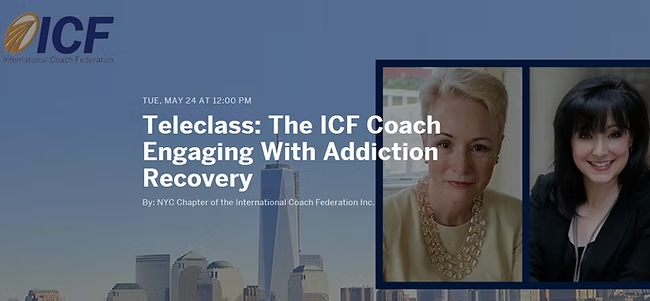
Learn How to Coach Clients in Addiction Recovery
- How can I identify when clients are recovering from active addiction?
- How does the addiction recovery process affect the coaching engagement?
- How do I use new language to improve communication with recovering clients?
We now understand that prioritizing recovery and developing strategies for sober daily living are key characteristics of coaching clients with substance use disorders. For coaches who are not themselves in recovery and may not know how to work with addiction, these priorities may present challenges. Nonetheless, these challenges do not preclude engagement with the client in recovery.
This training demystifies addiction and recovery, and develops coaching skills, language and tools to respond effectively to clients in addiction recovery. Participants expand their understanding of and gain confidence in applying this learning in both their professional and personal lives.
The International Coach Federation and the New York Certification Board have approved this program for 6 training hours.